
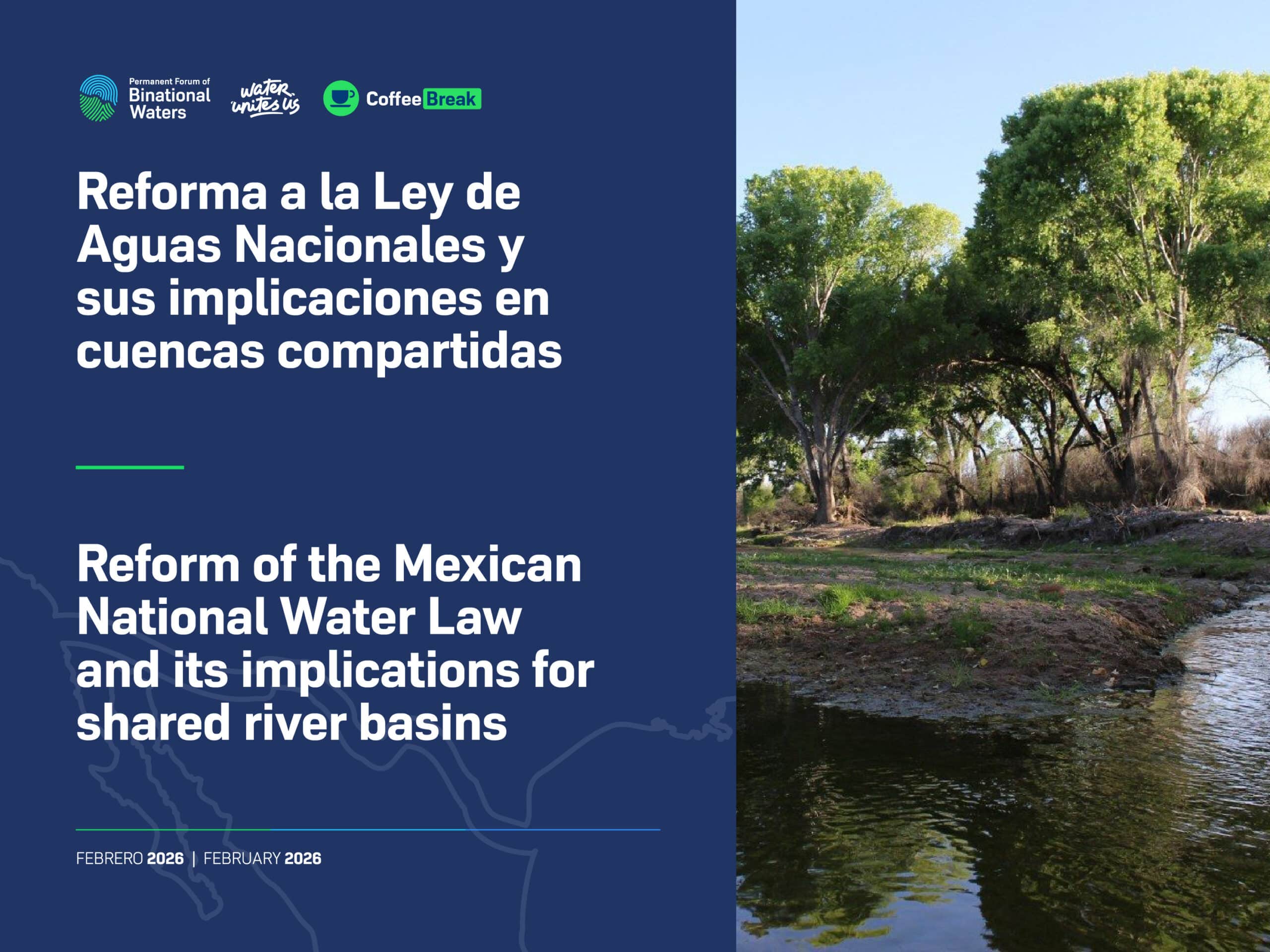
La reciente reforma de la Ley Nacional de Aguas de México ha generado importantes debates sobre gobernanza del agua, administración de derechos de agua y gestión de recursos hídricos compartidos. Para apoyar la comprensión de estos cambios, el Foro Permanente de Aguas Binacionales (FPAB) preparó una síntesis técnica basada en el debate de Coffee Break titulado “Reforma de la Ley Nacional de Aguas de México y sus implicaciones para las cuencas hidrográficas compartidas.” El documento examina los posibles efectos de la reforma en las cuencas hidrográficas transfronterizas y explora cómo los cambios legales e institucionales en México pueden influir en la gestión regional del agua.
Esta síntesis tiene un propósito informativo y busca hacer accesibles los elementos clave de la reforma a las partes interesadas tanto en México como en Estados Unidos. Si bien la reforma es una ley interna mexicana, su implementación puede tener implicaciones indirectas para sistemas fluviales compartidos como el Río Bravo y el Río Colorado, que sustentan comunidades, ecosistemas y actividades económicas a ambos lados de la frontera. Los debates sobre la legislación del agua suelen estar vinculados a conversaciones más amplias sobre la gobernanza transfronteriza del agua, lo que hace que estos avances sean particularmente relevantes para el público regional.
Uno de los temas centrales destacados en el debate es el énfasis de la reforma en la gestión integrada de cuencas hidrográficas y una mayor supervisión federal de la administración del agua. El nuevo marco promueve la toma de decisiones basada en la disponibilidad de agua, la planificación a largo plazo y una mejor regulación de las concesiones hídricas. Según la síntesis, este enfoque podría contribuir a una gestión del agua más centralizada, al tiempo que respalda el cumplimiento de los compromisos hídricos nacionales e internacionales.
El documento también explora las posibles implicaciones para las cuencas compartidas. Si bien la ley no aborda directamente las aguas transfronterizas, la creciente centralización de la gobernanza del agua podría influir en las decisiones que afectan a las regiones fronterizas. En cuencas hidrográficas como las del Río Grande y el Río Colorado, la asignación de agua, la planificación de infraestructuras y las decisiones sobre la gestión de recursos suelen tener consecuencias que trascienden las fronteras nacionales. Para las partes interesadas en la legislación sobre el agua, comprender estos cambios en las políticas proporciona un contexto valioso para futuros debates sobre la cooperación hídrica y la resiliencia regional.
La síntesis concluye con varias recomendaciones para fortalecer la implementación, entre ellas, reforzar las instituciones locales, incorporar las consideraciones del cambio climático en la gestión del agua, promover tecnologías modernas como la teledetección y los sistemas de información geográfica, incentivar los programas de recarga de acuíferos y fomentar una cultura de cumplimiento legal y responsabilidad compartida. Estas recomendaciones reconocen que la implementación efectiva de la legislación sobre el agua depende no solo de la legislación, sino también de la colaboración entre gobiernos, investigadores, usuarios del agua y la sociedad civil.
Se invita a los lectores interesados en la relación entre la política hídrica mexicana, las cuencas hidrográficas compartidas y la legislación sobre aguas a consultar la síntesis completa en formato PDF preparada por el Foro Permanente de Aguas Binacionales para obtener un análisis más detallado del debate y sus conclusiones.

Respuestas