
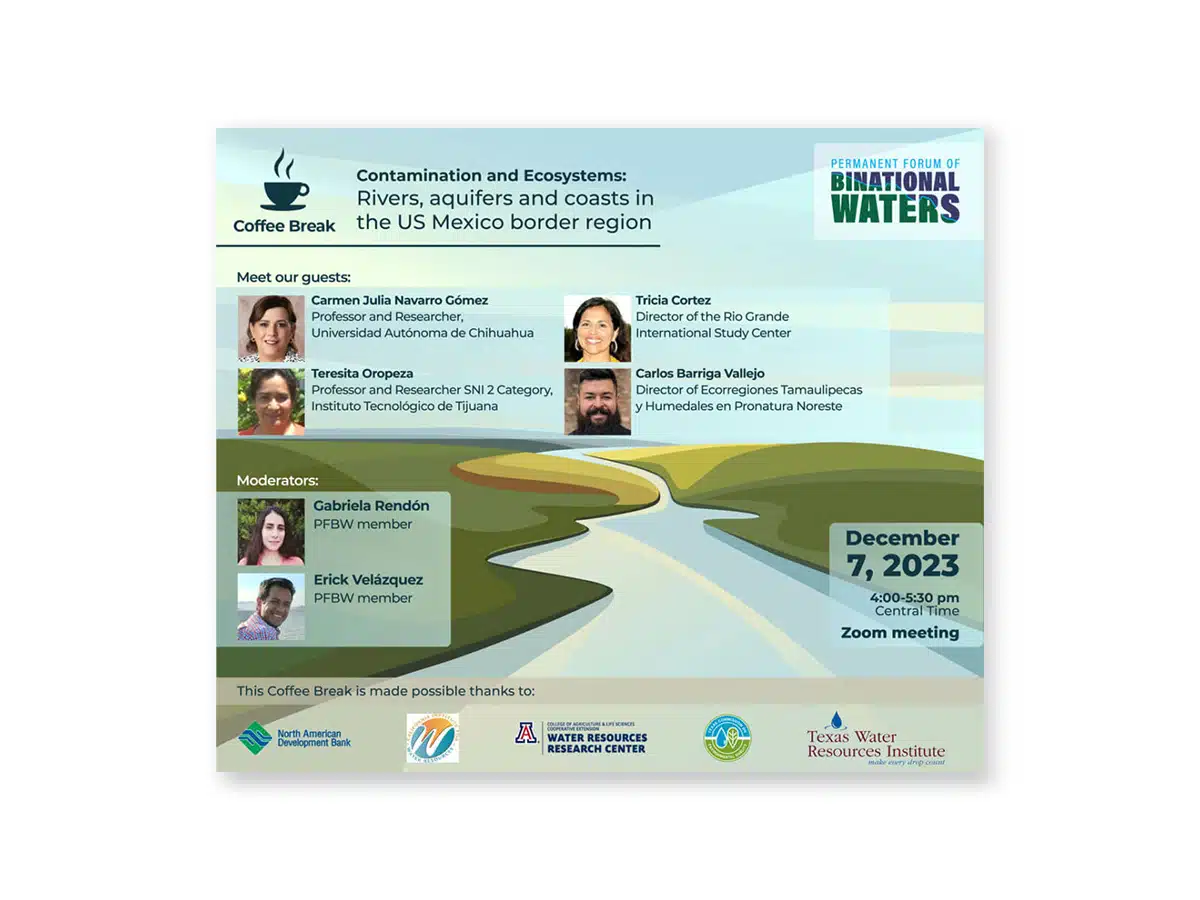
On December 7, the Permanent Forum of Binational Waters (PFBW) hosted a dynamic Coffee Break titled “Pollution and Ecosystems: Rivers, Aquifers, and Coasts in the Mexico-United States Border Region.”
This event brought together leading experts to address pressing water quality issues impacting shared water resources in the border region. Gabriela Rendón Herrera, head of strategic communication at PFBW, emphasized during the session, “In a context of diminishing water availability, addressing the quality of our rivers, aquifers, and coastal waters is essential for ensuring sustainability for future generations.” The event featured distinguished speakers who shared insights on pollution challenges and strategies for protecting aquatic ecosystems:
- Carmen Julia Navarro Gómez, Professor and Researcher at the Universidad Autónoma de Chihuahua (UACH), offered critical perspectives on regional water quality.
- Teresita Oropeza, Research Professor at the Instituto Tecnológico de Tijuana (ITT), highlighted her work on aquatic ecosystems and presented innovative mitigation solutions.
- Tricia Cortez, Director of the Rio Grande International Study Center, discussed cross-border collaboration for cleaner water systems.
- Carlos Barriga Vallejo, Director of Ecorregiones Tamaulipecas y Humedales en Pronatura Noreste, addressed the role of wetlands in enhancing water quality.
Finally, the Coffee Break concluded with a discussion on the existing barriers to solving these environmental problems.
Experts agreed on the need for greater awareness, community participation, and cross-border collaboration.
Proposed solutions ranged from active participation in social networks and community forums to significant agreements for wastewater treatment and the use of advanced technology.
This meeting about contamination and ecosystem, highlighted the urgency of addressing the growing contamination and ecosystem crisis at the U.S.-Mexico border, underscoring the importance of a binational and multidisciplinary effort to find sustainable long-term solutions.
The full recording is now available online, offering valuable insights for researchers, policymakers, and engaged community members alike. We invite you to watch, share, and continue the conversation.