
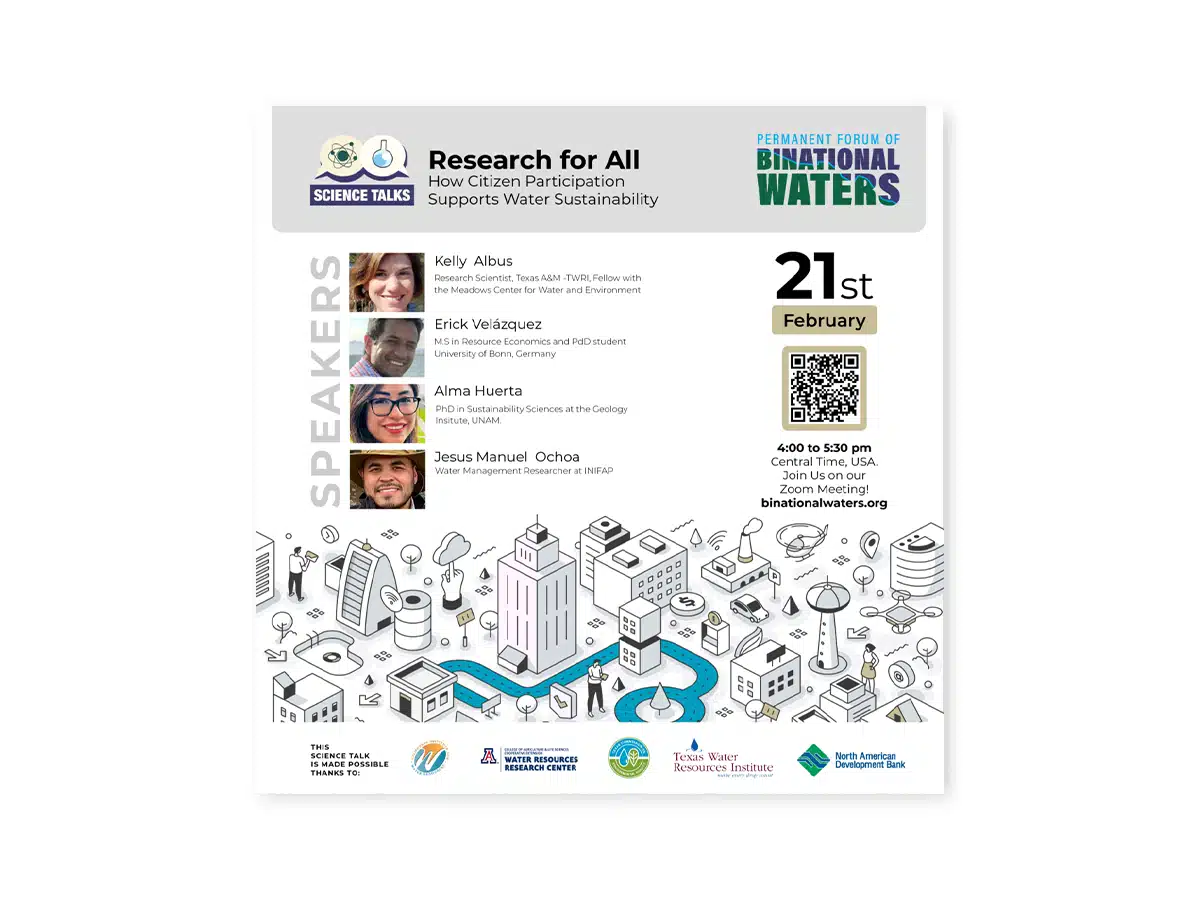
We have prepared a Science Talk event titled: Research for All: How Citizen Participation Supports Water Sustainability, where we will talk to scientists and experts working with this method, how it is effectively implemented, and lessons on how to include our border communities into the research development.
Panel Summary: Citizen Science and Water Sustainability
On February 21st, the Permanent Forum of Binational Waters hosted a dynamic panel exploring how citizen science contributes to water sustainability through community engagement and participatory research. Featuring a diverse lineup of experts from academic institutions and research organizations, the session focused on empowering non-professionals to actively participate in data collection, monitoring, and environmental awareness.
Dr. Kelly Albus, Research Scientist at Texas A&M – TWRI and Fellow at the Meadows Center for Water and Environment, emphasized the growing importance of citizen science in bridging data gaps, particularly in water quality monitoring. She underscored how public involvement enhances accessibility and democratizes scientific research.
Erick Valazquez, PhD candidate at the University of Bonn, presented the One Coast Community Project, showcasing how citizen participation strengthens coastal resilience by monitoring erosion and water quality. His case study illustrated how grassroots efforts can support interdisciplinary collaboration.
Dr. Alma Huerta Vergara from UNAM highlighted the broader benefits of citizen science in sustainability, including increased data coverage, public empowerment, and greater environmental stewardship. Meanwhile, Jesús Manuel Ochoa from UTEP shared practical applications of citizen engagement in northern Mexico, linking it to broader water sustainability efforts across the region.
Panelists also acknowledged challenges such as data quality control, ethical considerations, and maintaining volunteer engagement. Nonetheless, they agreed that citizen science remains a powerful tool to inform public policy and connect communities to environmental solutions.
The session concluded with a Q&A on training strategies, policy integration, and advancing science-society partnerships.
Read the full article of the event: How citizen participation supports water sustainability