 Water Unites Us Mug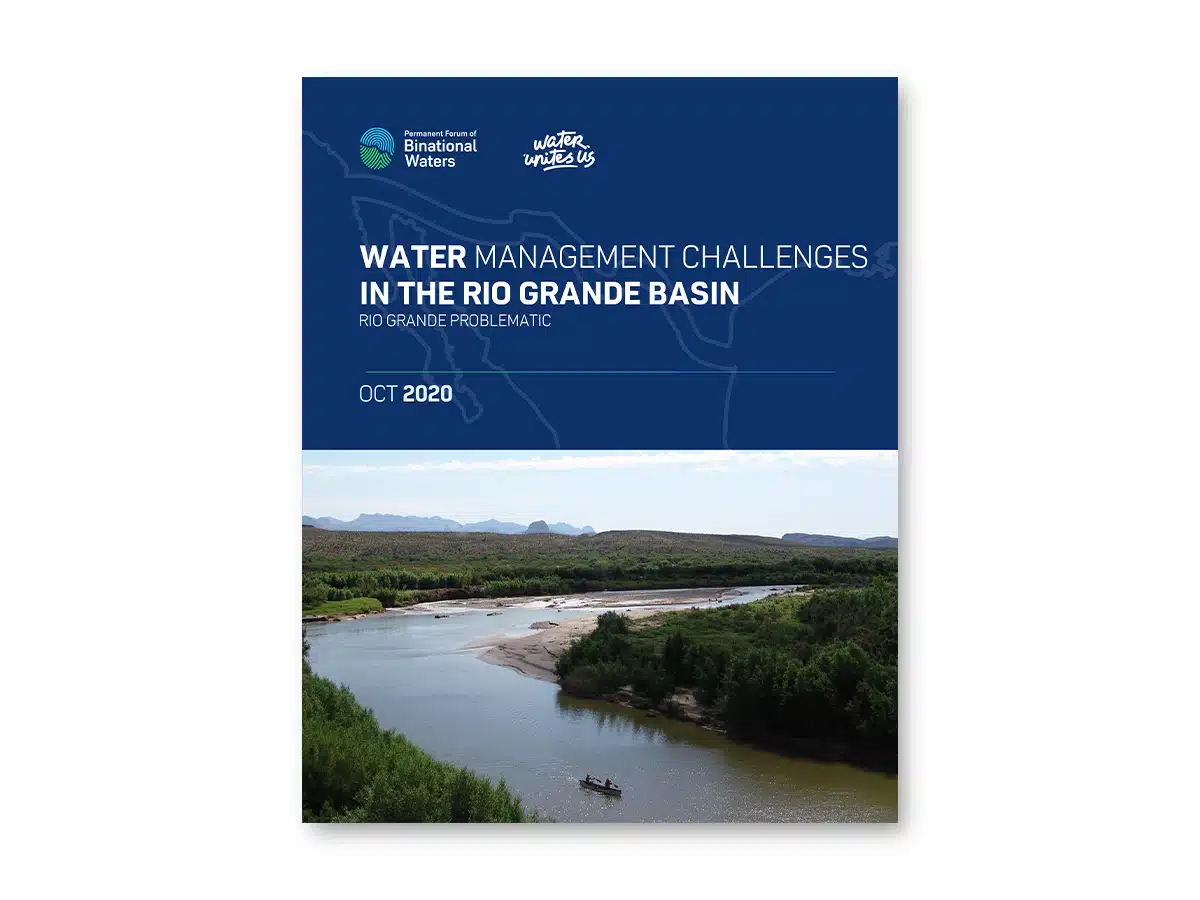
| Date | October 30, 2020 |
What is happening in the basin? (1 out of 6):
In this session, Dr. Luzma Nava and Dr. Samuel Sandoval talk about the current water problems in the Rio Grande/Bravo, specifically: Rio Grande Problematic: What is happening in the basin?
How the problematic is evolving and what are the main actors? (2 out of 6):
In this session, Dr. Luzma Nava and Dr. Samuel Sandoval talk about the current water problems in the Rio Grande/Bravo, specifically: How the problematic is evolving and what are the main actors?
When did the problematic begin? (3 out of 6):
In this session, Dr. Luzma Nava and Dr. Samuel Sandoval talk about the current water problems in the Rio Grande/Bravo, specifically: When did the problematic begin?
Why do we have this problem? (4 out of 6):
In this session, Dr. Luzma Nava and Dr. Samuel Sandoval talk about the current water problems in the Rio Grande/Bravo, specifically: Why do we have this problem?
What are the possible outcomes of the current water problems of Rio Grande/Bravo? (5 out of 6):
In this session, Dr. Luzma Nava and Dr. Samuel Sandoval talk about the current water problems in the Rio Grande/Bravo, specifically: What are the possible outcomes of the current water problems of Rio Grande/Bravo?
How can we solve the current water problems in the Rio Grande/Bravo? (6 out of 6).
In this session, Dr. Luzma Nava and Dr. Samuel Sandoval talk about the current water problems in the Rio Grande/Bravo, specifically: How can we solve the current water problems in the Rio Grande/Bravo?
The Rio Grande/Bravo basin is experiencing mounting water stress that demands urgent attention. This concern is at the heart of a six-part Open Mic edition hosted by the Permanent Forum of Binational Waters, where Dr. Luzma Nava and Dr. Samuel Sandoval provide a comprehensive look at the evolving crisis and discuss potential paths forward for sustainable water management.
The first episode introduces the audience to the current state of the basin. The experts explain how water shortages and prolonged drought have disrupted local communities, agriculture, and ecosystems. The issue is further complicated by legal frameworks and political boundaries that challenge coordinated water management efforts between Mexico and the United States.
Subsequent episodes delve into the historical timeline of the problem, exploring the origins of the conflict and the main institutional actors involved. From outdated infrastructure to increasing demand on finite resources, the series explains how the basin has become a focal point of water insecurity in North America.
One of the core strengths of this Open Mic edition lies in its focus on not only diagnosing the problem but also envisioning outcomes and solutions. Dr. Nava and Dr. Sandoval address what could happen if current trends continue unchecked—ranging from ecosystem collapse to intensified cross-border tensions. But they also offer hope through science-based policy, improved governance, and community involvement.
The final episode emphasizes the need for integrated and inclusive water management strategies that prioritize sustainability, equity, and long-term planning. These must be supported by accurate data, shared decision-making, and binational cooperation to be effective.
Throughout the series, the concept of water management is not treated as a technical task alone, but as a social and political challenge requiring multidisciplinary approaches. The Rio Grande is more than a river; it’s a shared resource that sustains life, culture, and economy across borders.
This Open Mic series invites viewers to better understand the complexity of the issue and to become engaged in shaping a more resilient future through informed water management practices.
Responses