
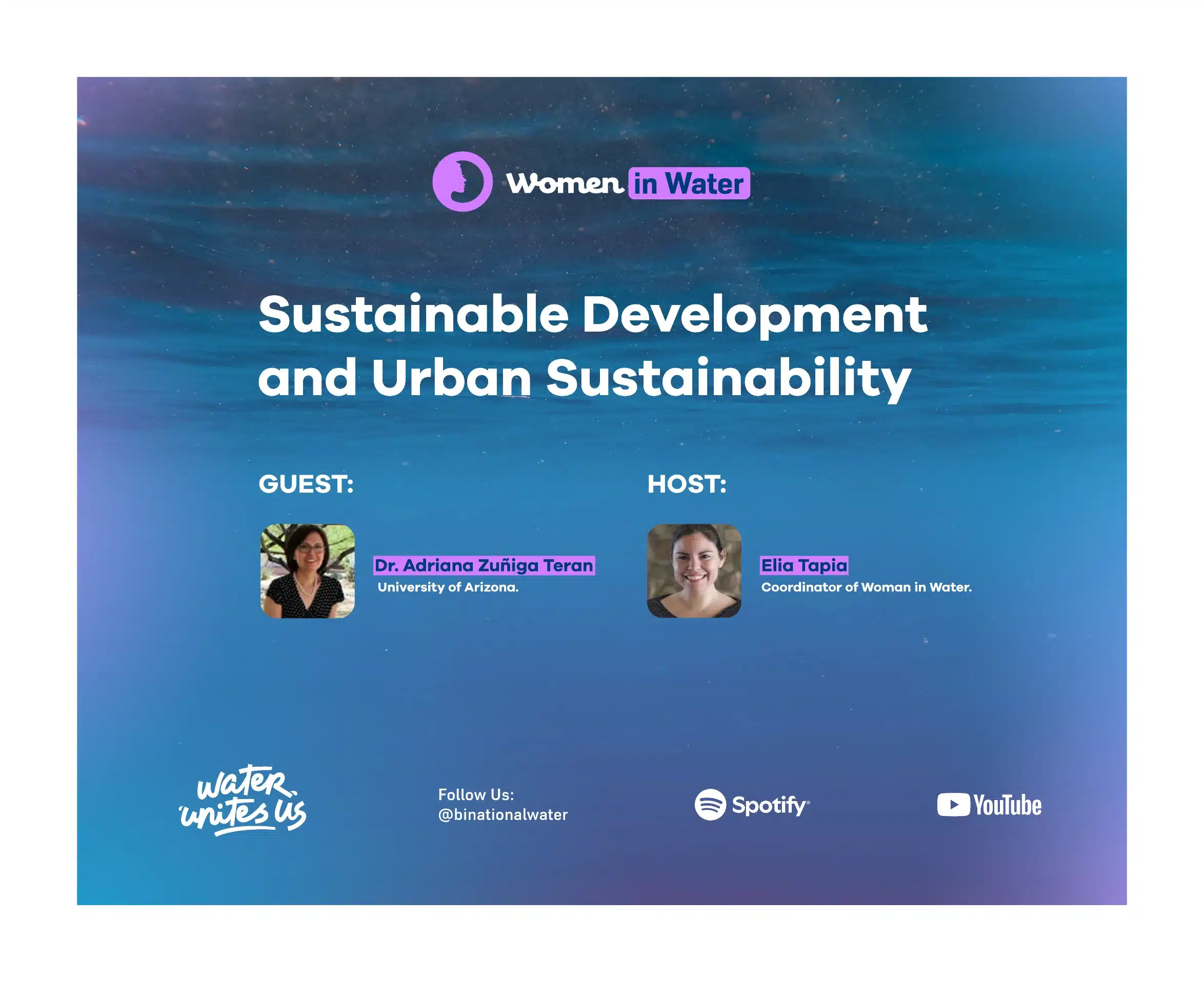
This interview is part of the Women in Water initiative, hosted by Dr. Elia Tapia, which highlights the voices and contributions of women working in water, sustainability, and environmental fields.
Originally trained as an architect, Dr. Adriana Zuñiga Teran became interested in sustainability after learning how construction and urban design can influence environmental conditions, climate change, and even human health. This perspective led her to focus on sustainable development, particularly in the context of cities and communities.
Her work examines how urban environments can become more resilient and livable through thoughtful planning and interdisciplinary collaboration. By integrating environmental science, urban design, and community engagement, she contributes to broader discussions on sustainable development and how cities can adapt to changing climate conditions.
During the conversation, Dr. Zuñiga Teran explains that solutions must remain context-specific. Different communities face unique environmental, social, and economic challenges, which means that sustainable strategies must be tailored to local conditions. Continuous learning and adaptation are essential to improve policies and practices related to sustainable development.
One example she highlights is the creation of green spaces in urban areas. These spaces provide shade, help reduce ambient temperatures, and contribute to healthier urban ecosystems. Beyond environmental benefits, green spaces also support mental well-being and strengthen community connections, showing how sustainable development can positively influence both environmental and social outcomes.
However, implementing these initiatives is not without challenges. Long-term community engagement is often difficult to maintain. Renters, for example, may have limited authority to make decisions about green spaces in their neighborhoods. Language barriers and limited awareness of public programs can also reduce participation, making it harder to sustain projects over time.
Dr. Zuñiga Teran also emphasizes the importance of considering cross-border dynamics, particularly between the United States and Mexico. Environmental decisions frequently affect both countries, making binational collaboration essential for effective governance and long-term sustainable development strategies.
To address these complex challenges, interdisciplinary collaboration is crucial. Combining knowledge from different fields and cultural perspectives allows researchers and practitioners to design more comprehensive solutions.
Finally, Dr. Zuñiga Teran encourages women working in water and environmental fields to confidently share their expertise and professional contributions. Recognizing and amplifying women’s voices in science is an important step toward building a more inclusive and innovative future for sustainable development.
Watch the full interview on YouTube here.
Responses