
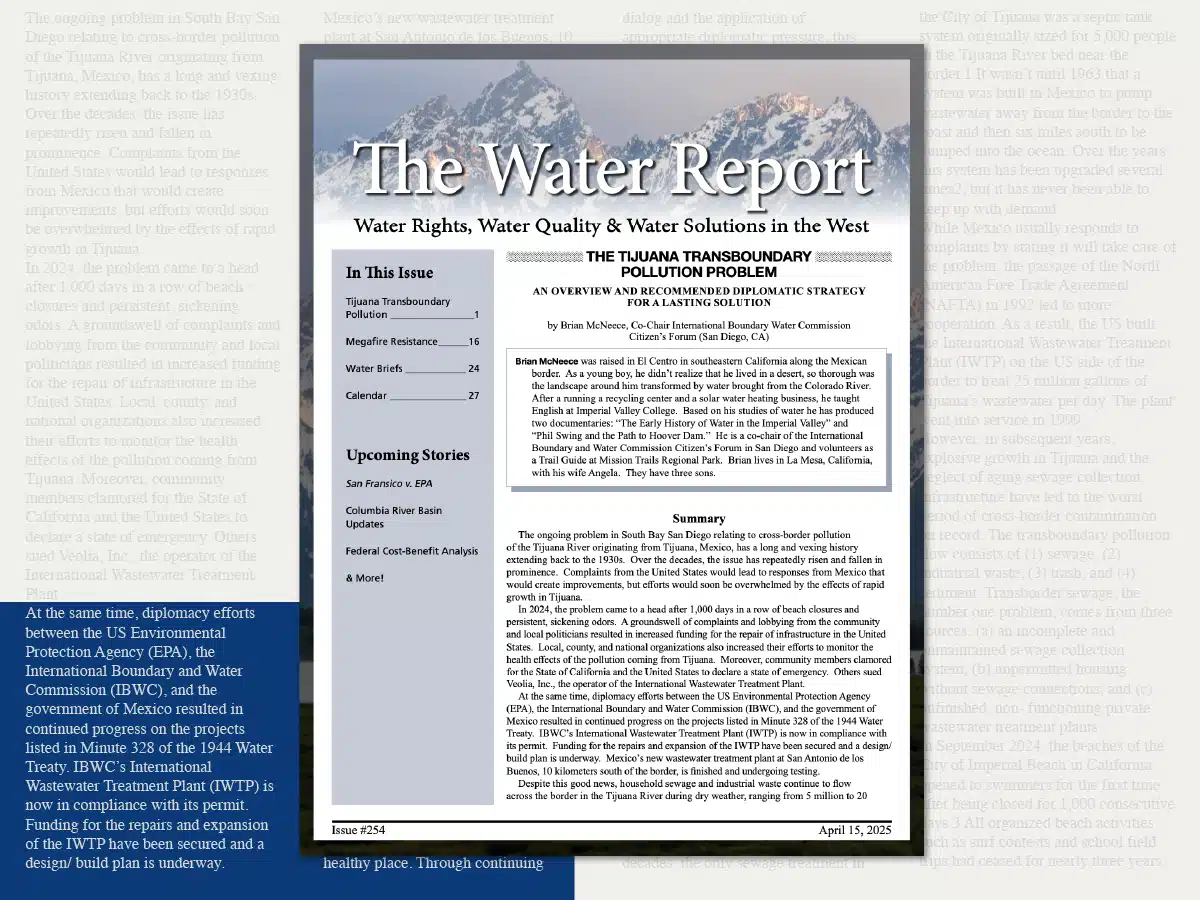
The Tijuana Transboundary Pollution Problem continues to shape how border communities understand their shared environmental future. The issue is bigger than geography. It reflects decades of strain on both sides of the border and the need for sustained, coordinated action.
In his recent article for The Water Report, Brian McNeece, an advisor to One Coast One Community (OCOC) at the Permanent Forum of Binational Waters, offers one of the clearest explanations of the Tijuana Transboundary Pollution Problem and the forces that have allowed it to persist.
He traces nearly a century of rapid growth, underinvestment, infrastructure failures, and the lived reality of residents facing beach closures, odors, and health concerns.
The author also outlines ongoing efforts that show what collaboration can achieve, including repairs to the International Wastewater Treatment Plant, the new facility at San Antonio de los Buenos, and commitments made under Minute 328 of the 1944 Treaty.
The Tijuana Transboundary Pollution Problem
These steps are meaningful even if they do not yet resolve the deeper structural issues behind the pollution problem of Tijuana.
His analysis calls for stronger diplomatic engagement and sustained federal investment in Mexico to repair sewer networks, expand treatment capacity, regulate industrial waste, and curb illegal dumping. The paper frames this as a shared responsibility rather than a bilateral conflict.
Brian’s McNeece work invites readers to imagine a future defined not by crisis but by cooperation. It is essential reading for anyone committed to protecting shared waters and building long-term solutions for the region.
The paper frames this as a shared responsibility rather than a bilateral conflict, emphasizing the role of transboundary water management in achieving durable outcomes.
Anyone who cares about binational water management, environmental health, and the future of our shared coastline will find his analysis both timely and essential.
We invite you to read The Tijuana Transboundary Pollution Problem in full and join the broader effort to support lasting, collaborative solutions for the watershed.
Responses